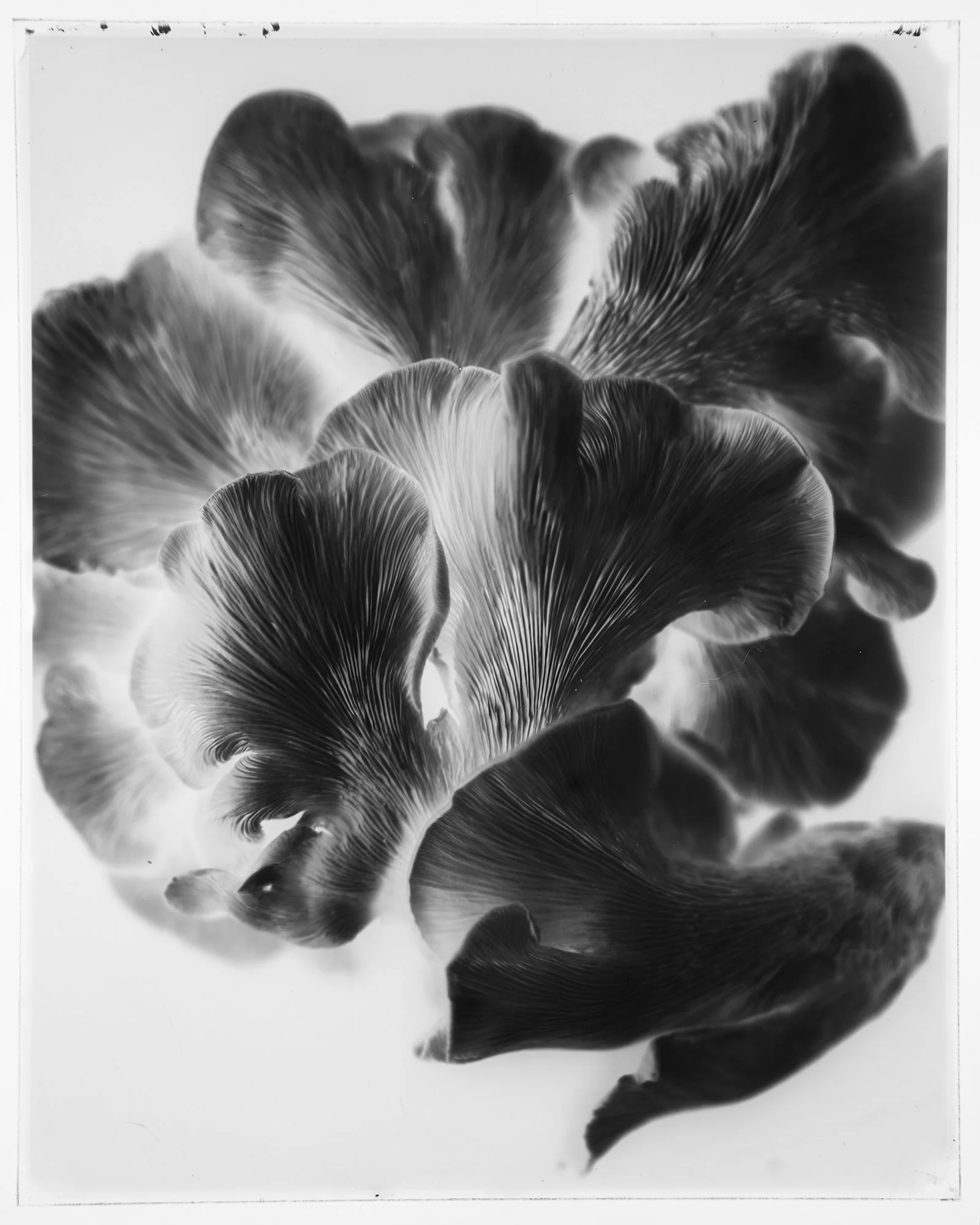
Melbourne Dry Plates are coated with an orthochromatic emulsion, can be handled under darkroom safelight, and developed by inspection. See below for a full description of recommended exposure and processing, and information on how they are made.
Load, expose, develop
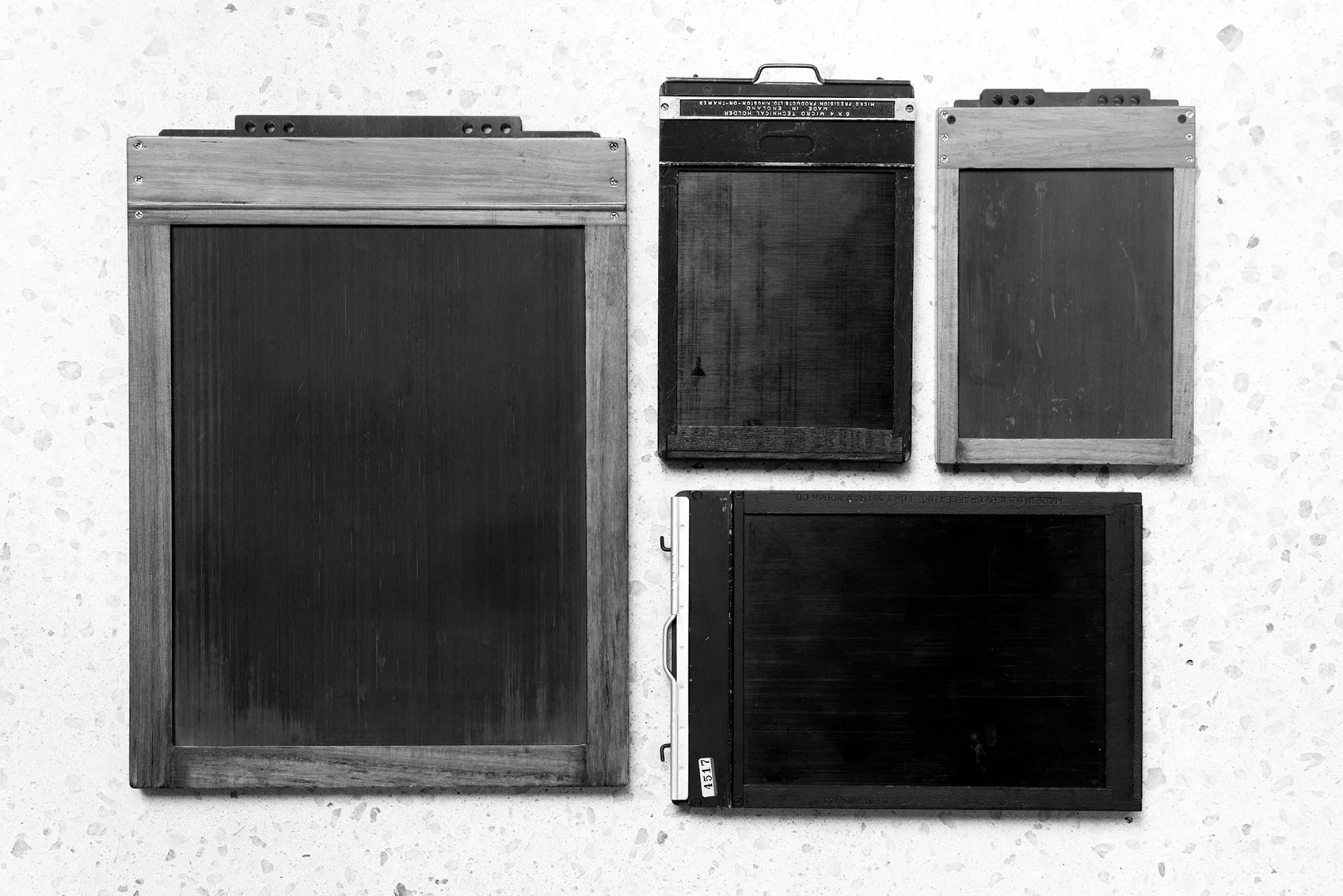
Melbourne Dry Plates can be handled under safelight, any darkroom safelight that is safe for photographic enlarging paper will be fine. If you are unsure please read here for detailed info on safelight use. If you do not have a darkroom space and will be loading plates in a dark/change bag I can custom ‘notch’ the plates in one corner for orientation in the dark.
You will need to load your plate into a plate holder designed to for dry plate or wet plate (a holder that accommodates 2mm glass plates), there are a number of modern manufacturers of plate holders. I use both modern wet plate holders made by Chamonix, and vintage dry plate holders purchased on Ebay.
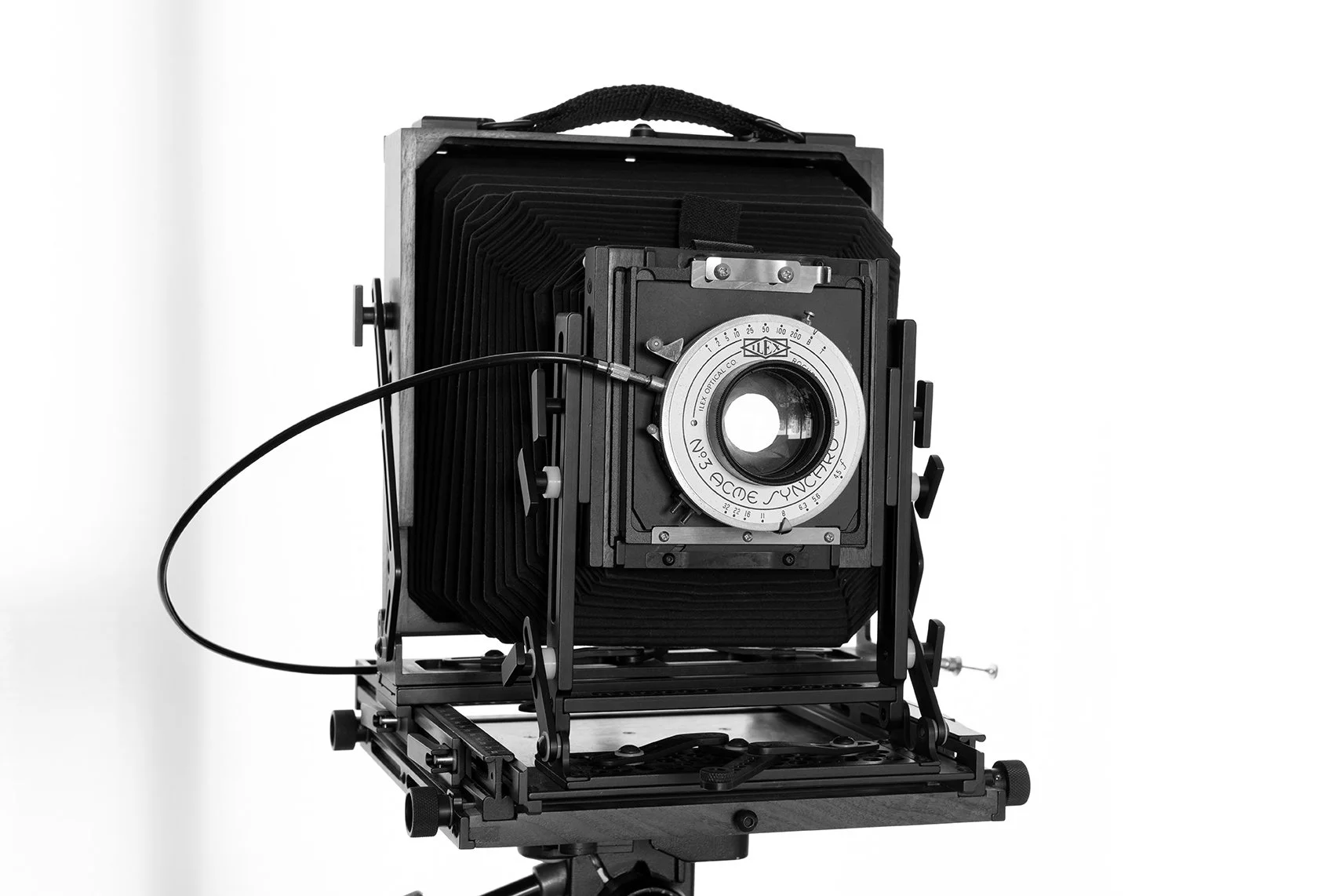
I have rated this emulsion at 1 ISO. It is very slow (ultra fine grained), and mostly sensitive to UV light.
Rate this at ISO 1 if you are shooting outdoors on a bright day, but if you are shooting indoors, using strobe lighting, shooting early in the morning or late in the day you will very likely need more exposure. Conversely if you are shooting in the middle of Summer, or in a place that has very high UV you may need less exposure. Testing and practice is certainly required.
As this is a slow emulsion, reciprocity failure can often be encountered and extra exposure will be needed (for exposures longer than 1 second). There are many apps that will calculate reciprocity failure compensation for you, I use ‘Art of Photo’ which also allows you to calculate other things like bellows extension factor etc and I find it very useful. You can base your calculations on those for ‘Ilford ORTHO Plus’ as a starting point. You can read Ilford’s information on reciprocity failure compensation here.
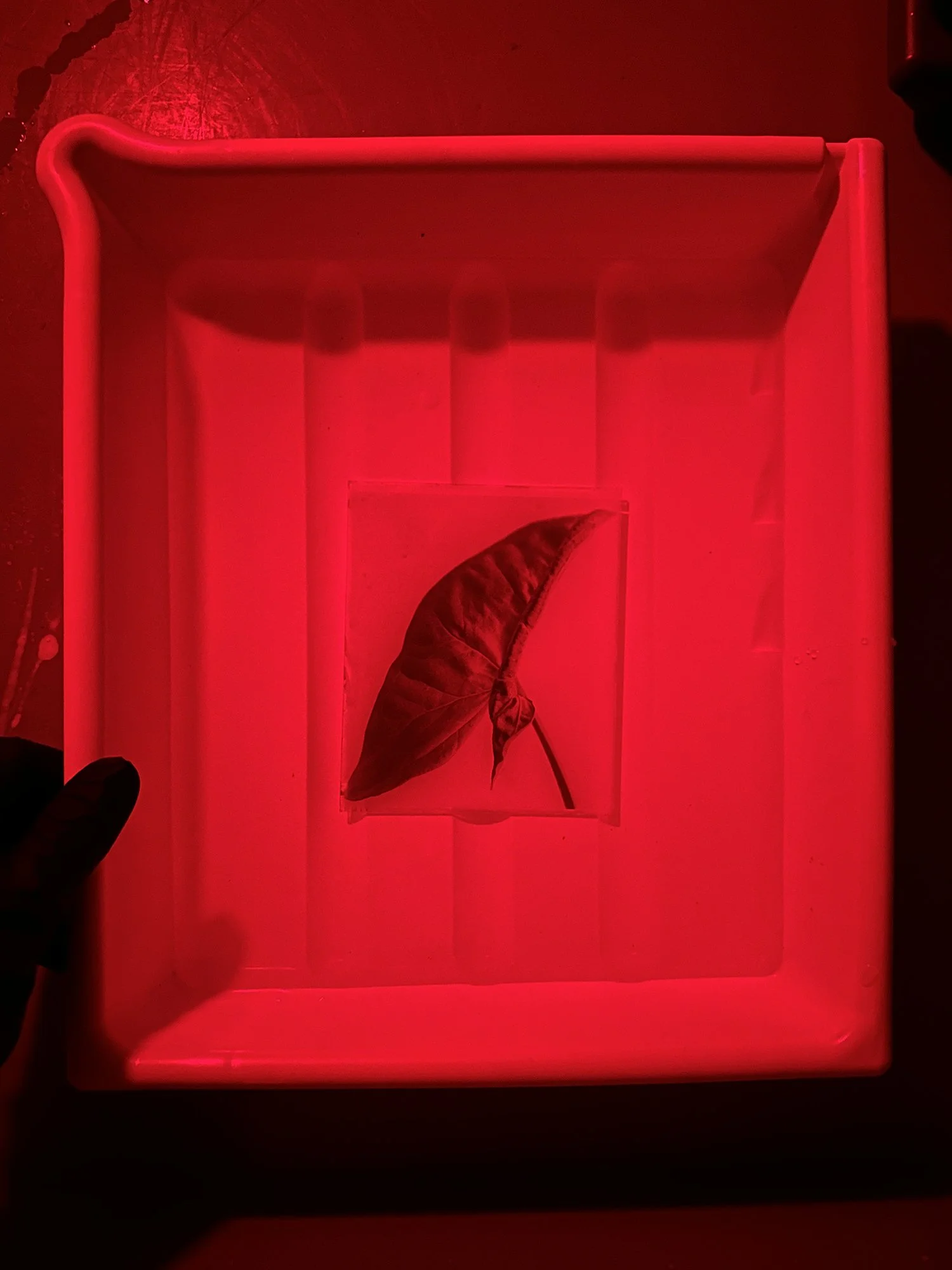
Development is similar to developing film, but it can be done under safelight, for standard development I recommend Kodak HC-110 (dilution B) for 6 minutes. I have also had excellent results using Bergger PMK (pyrogallol staining developer) at standard dilution for 12 minutes, but I find I need extra exposure for this.
I use a plain water stop bath (30 seconds), and fix using plain hypo (sodium thiosulphate) or rapid fix as per the manufacturer’s directions.
Wash in a tray of gently running water for 10-15 minutes, a final rinse in distilled water and air dry standing in a rack (dish rack or similar).
A consistent temperature between trays of chemistry is important as too warm or too cold development or washing may cause the emulsion to lift. I use a hardening agent in the emulsion which helps prevent this , but care should still be taken.
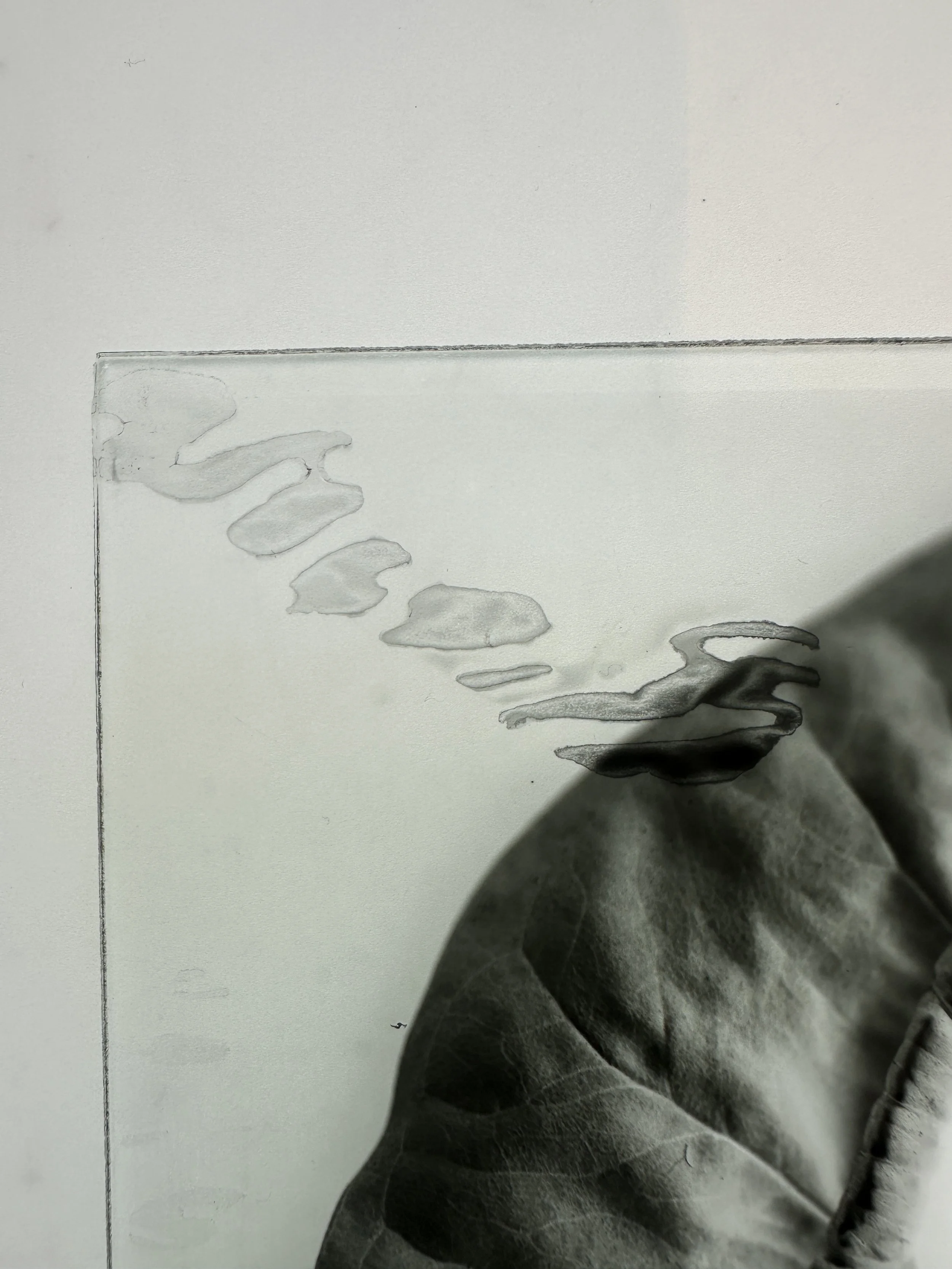
Because these plates are hand poured, inevitably sometimes emulsion sticks to the back of the plate. This does not affect exposure or your image, after the plate has dried I scrape it off the back with a razor blade. It can also be scraped when wet, but I avoid doing this as the gelatin emulsion is still very soft and your image can easily be damaged.
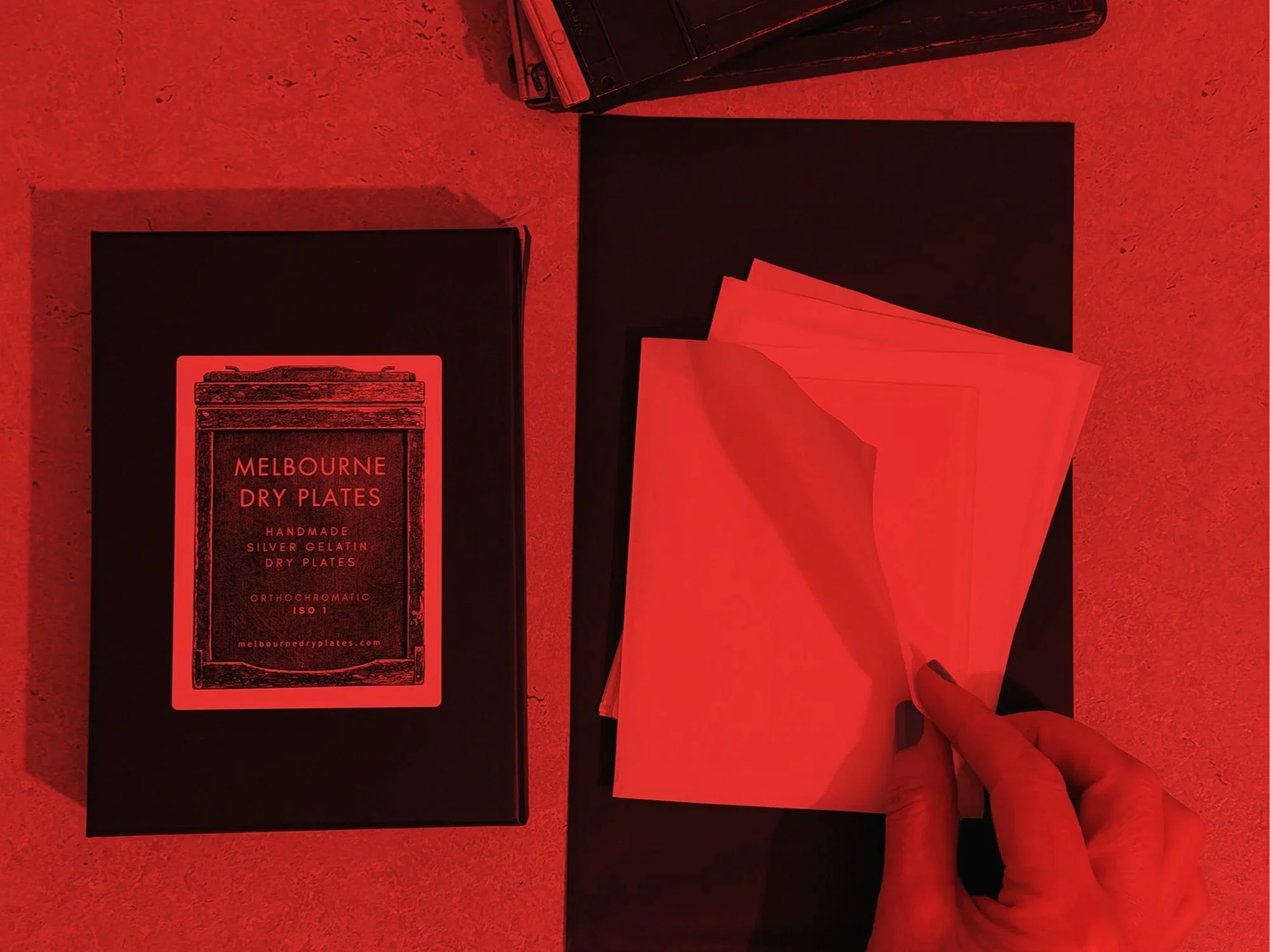
How are they packaged, which way is ‘emulsion up’?
Your plates are packaged in glassine sleeves, emulsion side up with the sleeve open on the right hand side. These are inside a light safe black bag, and I mark ‘UP’ on it also.
If you need to load the plates in a change bag on location, you can ask me to ‘notch’ the plates. I grind a small notch on the top right hand side (similar to sheet film) which can be felt in the dark for orientation. This is available as an option at checkout in the web shop.
Storage and shelf life
Store your plates in the light proof bags and boxes they come in, in a cool dim place. For long term storage you can refrigerate them (1-2 years). Store the box in a zip-lock bag in the fridge for protection. When you remove the bag from the fridge allow it to come to room temperature before opening, this will prevent condensation forming on the plates. There is the potential for them to stick together or stick to the paper sleeves if they get damp.
How are they made?
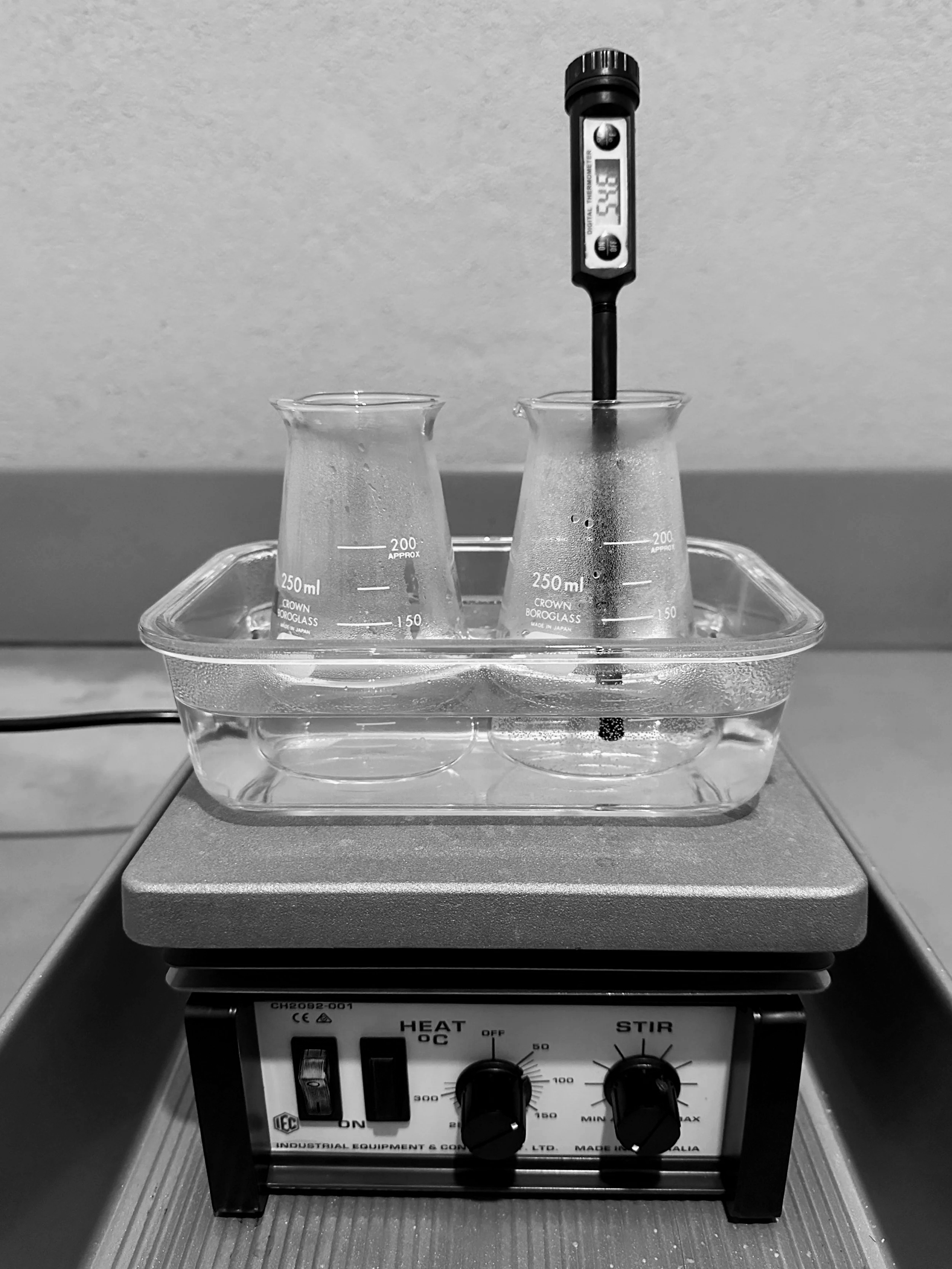
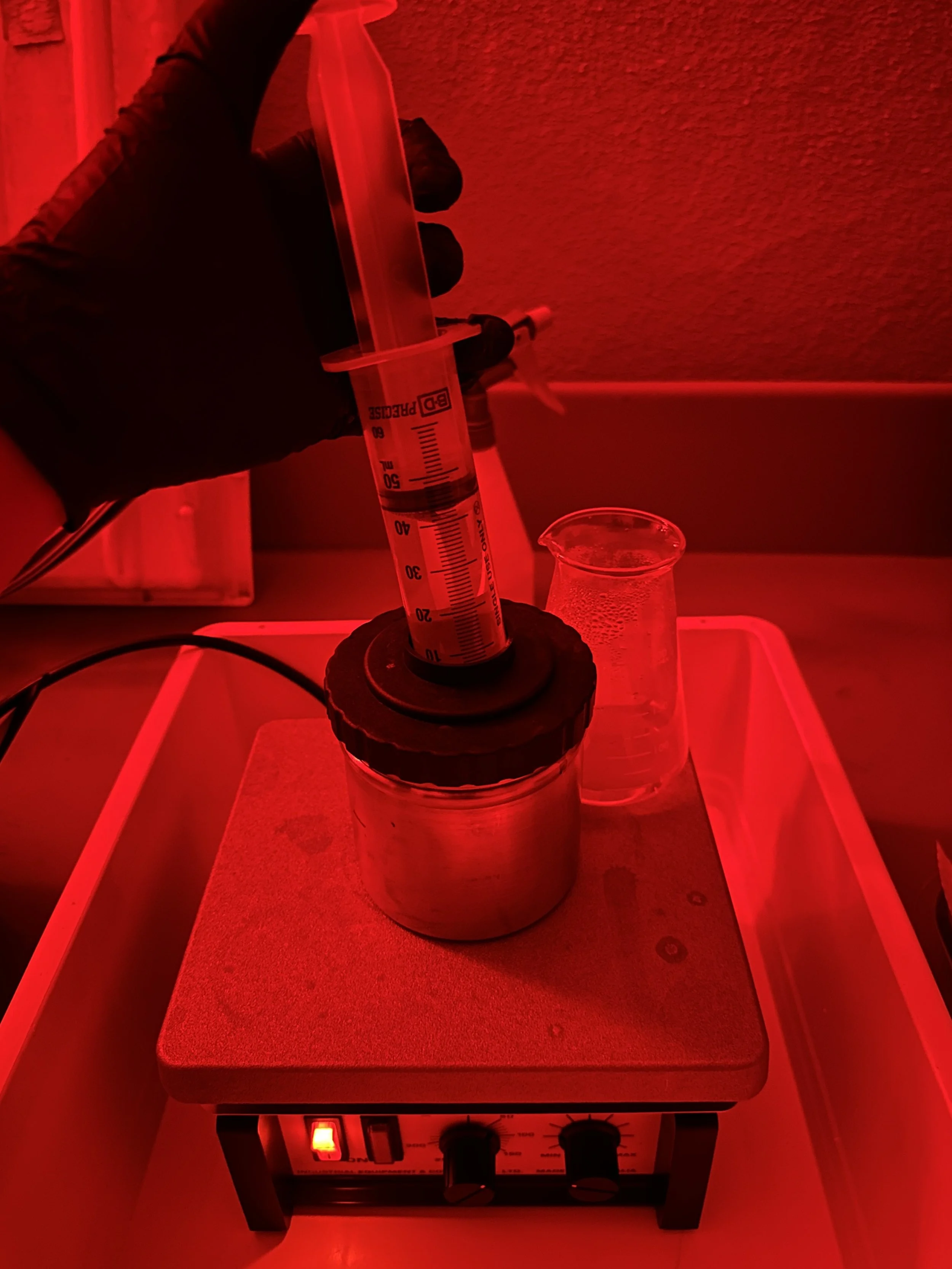
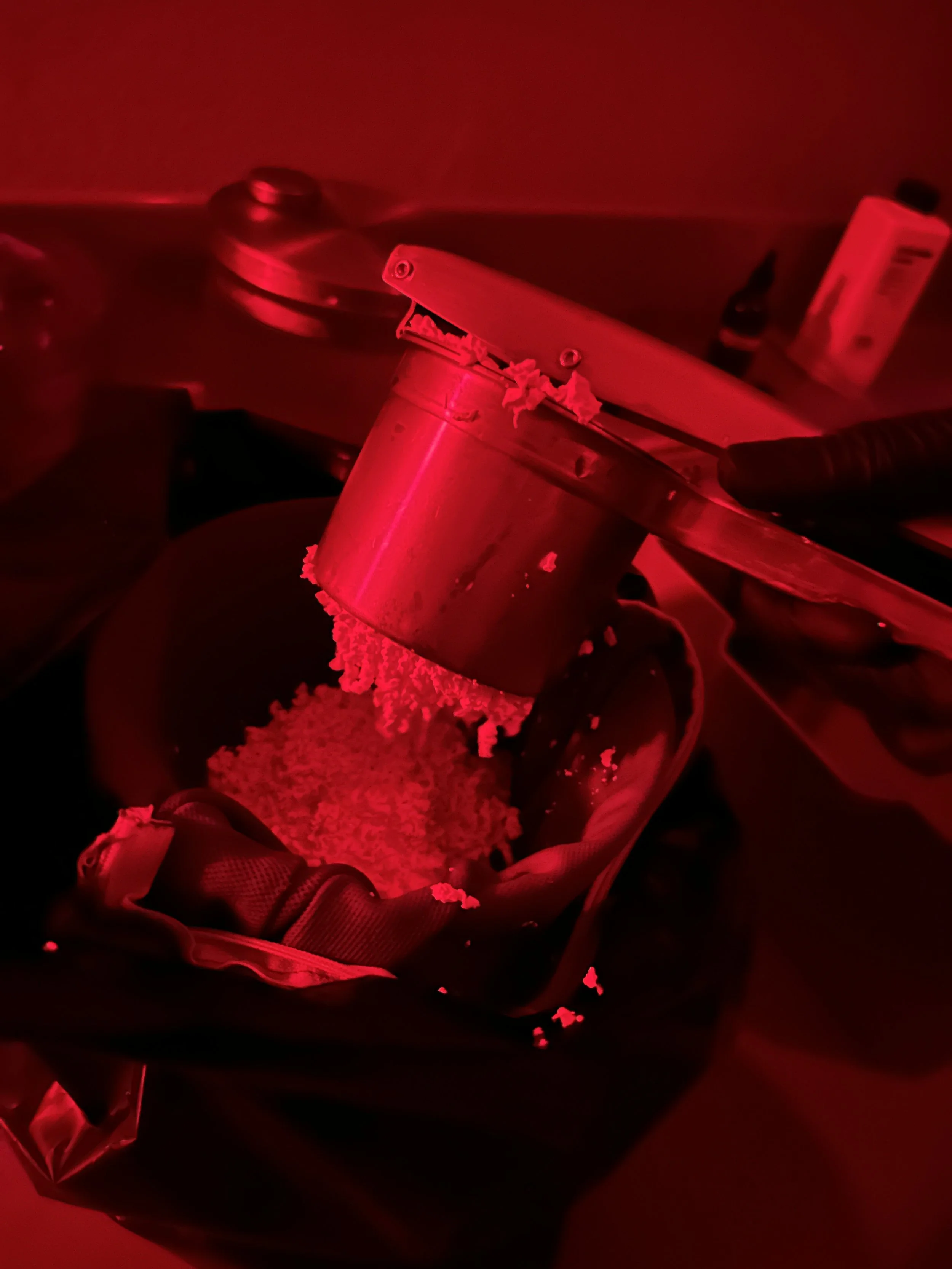
The Silver Gelatin emulsion used is hand made in my darkroom, it is based on a Kodak recipe from the early 20th Century with added sensitizer to make it orthochromatic, hardener to both harden the gelatin and help it bond to the glass plate, and a preservative to aid shelf life.
Although only a handful of chemicals/ ingredients are used the process is time consuming. The process takes place over two days, time and heat control are paramount.
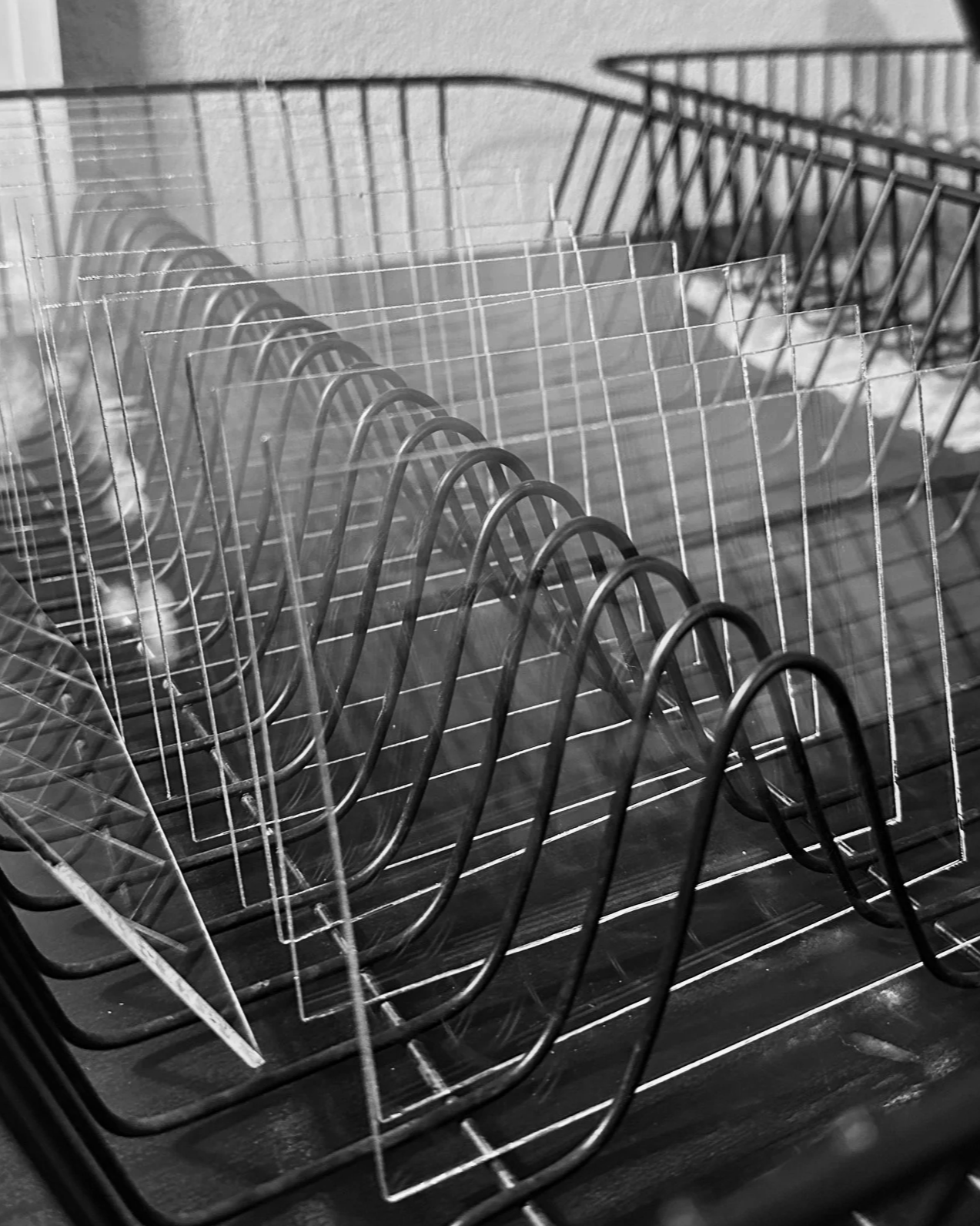
Glass is cut to size, notched (if requested), and the edges are filed for safe handling. Each plate is then thoroughly cleaned and air dried in preparation for coating.
I pour the emulsion to coat the plates individually by hand, they are then let to set and dry and harden overnight.
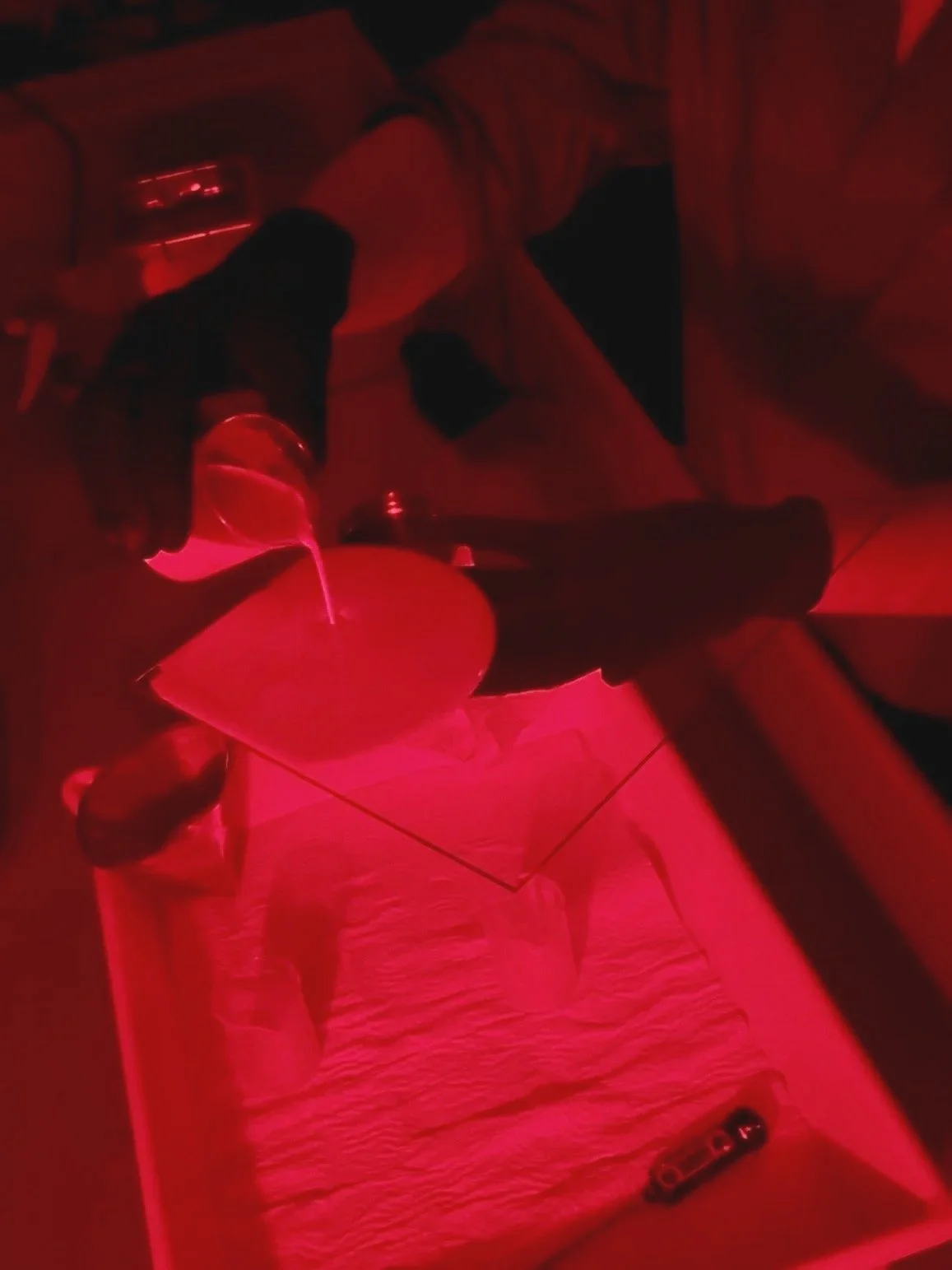
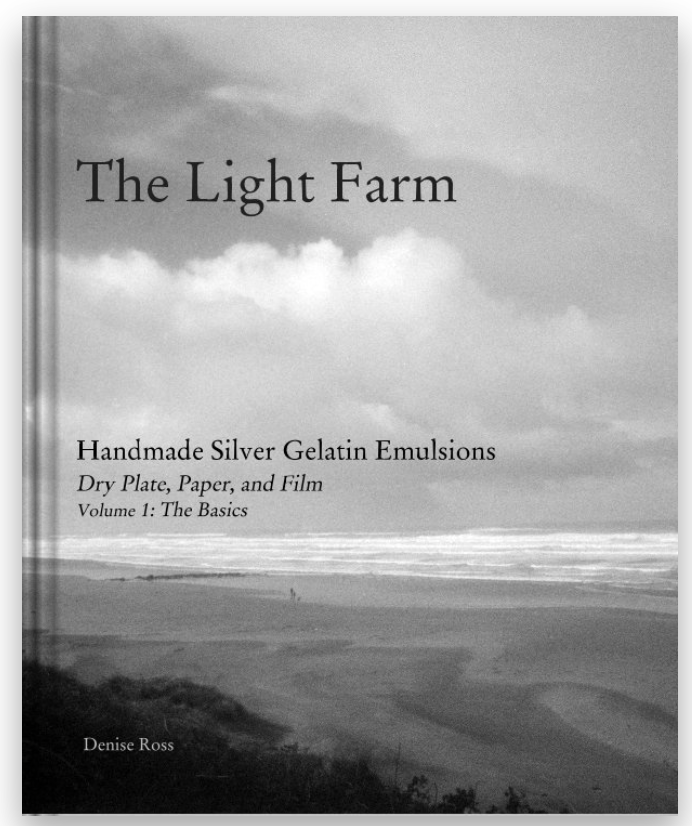
The full process of Silver gelatin emulsion making is too large a topic for this space, if you are interested in DIY emulsion making I can recommend The Light Farm by Denise Ross. Although the recipe I use is not from her book I return to it very often for information. It is a fantastic read!